Israel’s recognition of Somaliland: Power play or Gaza expulsion plot?
TEHRAN – Israel’s recognition of Somalia’s breakaway region of Somaliland has triggered fierce backlash across Africa, the Arab world, and beyond. At the same time, the move has brought Israel’s underlying motives into sharper focus, raising questions about regional security, international law, and the fate of Palestinians in Gaza.
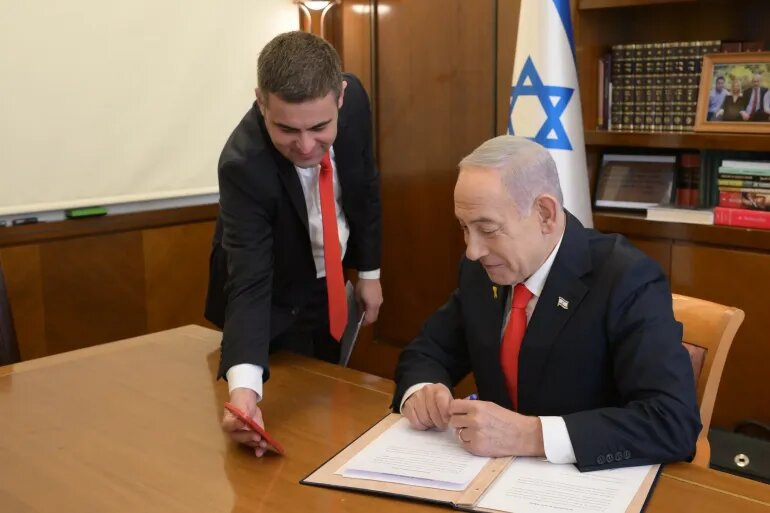
Prime Minister Benjamin Netanyahu announced on Friday that Israel and Somaliland had signed a joint declaration establishing full diplomatic relations. Within hours, Somalia’s government condemned the move as illegal and an attack on its sovereignty, stressing that Somaliland remains an inseparable part of Somalia.
Although Somaliland declared independence in the 1990s, it has not been recognized by Somalia or any other world government. Israel’s unilateral recognition has therefore drawn worldwide condemnation.
The African Union (AU) swiftly rejected Israel’s move, reaffirming its commitment to Somalia’s unity and the “intangibility of borders inherited at independence.”
Arab countries also condemned the recognition. Saudi Arabia denounced the step as a violation of international law and pledged full support for Somalia’s sovereignty. Qatar accused Israel of undermining international legitimacy and fueling instability, urging it instead to recognize Palestine and end the Gaza war.
Egypt coordinated with Somalia, Turkey, and Djibouti to oppose “dangerous developments” in the Horn of Africa. Other Arab states, including Iraq, Jordan, and Kuwait, issued similar rebukes.
Palestinian response
The Palestinian Foreign Ministry described Israel’s recognition of Somaliland as a threat to Arab and regional security. Hamas went further, calling it a “dangerous precedent” and accused Israel of seeking false legitimacy while committing war crimes in Gaza.
Hamas: “We affirm our absolute rejection of the occupation’s plans to forcibly displace our people, including attempts to use “Somaliland” as a destination for the people of Gaza.”
Hamas noted that Israel’s recognition was linked to plans to forcibly displace Palestinians from Gaza to Somaliland. This echoes earlier reports that Israel had quietly explored resettlement options in Africa as part of a broader strategy to reduce the Palestinian presence in Gaza. Somaliland, as a destination for Palestinians expelled from Gaza, has now become a central concern.
Human rights advocates in Somaliland had already warned that such a move would not only destabilize the region but also implicate Somaliland in the Israeli genocide in Gaza. The idea of transferring Palestinians into a fragile, unrecognized territory raises profound humanitarian and legal questions. Critics argue it would amount to ethnic cleansing disguised as diplomacy, using Somaliland’s quest for recognition as leverage to facilitate one of the most controversial population transfers in modern history.
For Palestinians, the plan represents a double dispossession: first from their homes in Gaza, and then into a territory whose own sovereignty is contested. For Somaliland, it risks being drawn into a geopolitical bargain that could compromise its legitimacy and embroil it in the Israeli war crimes.
U.S. Republican support for Somaliland
Recognition of Somaliland has also found support among some U.S. Republicans. In August, Senator Ted Cruz urged President Donald Trump to recognize Somaliland, citing its ties with Israel and support for the Abraham Accords. An Al Jazeera report suggested Cruz had received nearly $2 million in funding from pro-Israel lobby groups, including AIPAC.
On Friday, Somaliland’s president, Abdirahman Mohamed Abdullahi, announced that the region would join the Abraham Accords, further aligning itself with Israel and U.S.-backed normalization efforts.
Strategic calculations
Beyond the Palestinian issue, analysts argue that Israel’s recognition of Somaliland is rooted in strategic calculations. In November, a report by Israel’s Institute for National Security Studies highlighted Somaliland’s potential role in intelligence monitoring of Yemen’s Ansarullah and launching direct operations against the movement.
The UAE already operates a military base in Berbera, equipped with a port and airstrip. Analysts suggest this base could become a critical node in the UAE’s anti-Ansarullah campaign, with Israel potentially leveraging Emirati ties to expand its own regional footprint.
Presently, it is evident that Israel’s recognition of Somaliland is more than a diplomatic gesture—it is a geopolitical gambit. It intertwines three strategic objectives:
- Regional military positioning – Establishing a foothold near Yemen and the Red Sea
- Diplomatic expansion – Bringing Somaliland into the Abraham Accords and strengthening ties with U.S. allies
- Palestinian displacement – Exploring Somaliland as a destination for Palestinians expelled from Gaza, a plan that raises grave humanitarian, legal, and moral concerns
The backlash from Somalia, the AU, Arab states, and Palestinian factions underscores the risks of this move. Far from isolating Somaliland, Israel’s recognition has exposed the deep fault lines between sovereignty, international law, and strategic ambition in the Horn of Africa.
Leave a Comment